Henna (Lawsonia inermis) a medicinal herb: Effective in sickle cell disease
Abstract
Sickle cell anemia is a usual disease in some countries (e.g. Oman). In this disease, sickle-shaped cells are formed. The blood vessels are entrupted by these cells can results difficulty in oxygen transportation. By the various studies founded that production of sickle cell are prohibit by the use of Lawsonia innermis. The Lawsone (2-Hydroxy-1,4-Naphthoquinone) is the major constituents of henna leave which have the anti-sickling activity, because they increase the oxygen affinity of red blood cells. The anti-sickling activity of henna proved by incubation of aqueous and methanolic henna extracts with sickle cell disease blood. Further 2%, sodium bisulphite was added into therefore reduction to oxygen tension. Therefore, the percentage of sickled cells to normal red blood cells was observed at 30 minutes intervals. Henna proved that, they can delay the sickling process of RBC. Both extracts(aqueous and methanolic henna) can delay sickling for about an hour.
Keywords
Henna, Lawsonia inermis, anti-sickling
Introduction
Sickle cell anemia is a type of autosomal recessive genetic disorder. By the point mutation in the β globin gene on chromosome 11 at the 6th position in which amino acid and glutamic acid substituted by the amino acid valine. The hemoglobin (Hb) S is formed due to mutation. There are four globin chains presents on each hemoglobin molecule. In the normal condition Hb A has two chains and two chains but in SCA the mutation of chain is occur so instead of HB A, the Hb S is formed. Hb S out of 4 chains, the two chains are undergo in mutation. Each human being inherits two β globin genes, one from each parent. Therefore, there are two states of SCA, first one is heterozygous and second one homozygous. In a heterozygous state, inheritance of only one defective gene which results in a mild disease form called sickle cell trait. In a homozygous state, two defective genes result in a disease form called sickle cell disease 1.
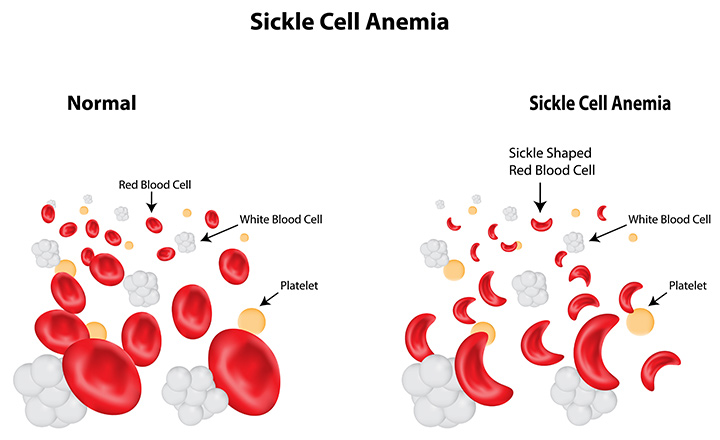
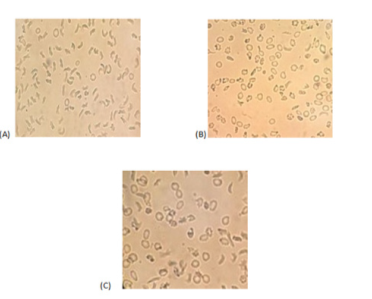
In SCD, the RBC change their biconcave shape(Figure 1). The shape of RBC is changed due to hemoglobin polymerization during deoxygenation in low oxygen tension conditions. Initial hemoglobin concentration defines the sickling mechanism in the cell as well as the rate of deoxygenation 2. Elevation of RBC rigidity and density and in the reduction of RBC deformability is the result of sickling. Patients with SCD have a painful disaster when Hb S is polymerized and show to vaso-occlusion 3. Sickling is a complex mechanism that depends on many events. Some of the events enhance and increase the severity of other events.
Sickle cell disease therapy
Till now any permanent cure or treatment for Sickle cell anemia but the some supportive measures and herbal drugs like henna are available to manage the acuteness of the disease and to minimize the frequency of the disaster. The Blood transfusion, body hydration, and sickling inhibition are the preventive tools for sickle cell anemia. By preventing Hb S polymerization, induction of membrane changes, and promotion of capillary flow, the sickling inhibition can be achieved 4, 5.
Henna
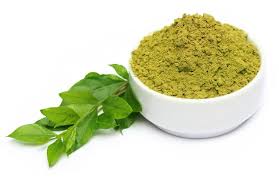
Lawsoina inermis L. basically known as henna, this is the medicinal herb belonging to the Lythraceae family. Its looks like a small shrub like tree, the height of the plant is about 2-6 meter with spine-tipped branchlets. The outlines of the leaves of the henna plant are as smooth, opposite, sub-sessile, elliptically shaped and broadly lanceolate, having depressed veins clearly visible on the dorsal surface. Henna have the noticeable benefits to humans, and these benefits are recognized as ‘baraka’. Henna also have the possessions that deter and relieve human discomfort from fungal infections, sickle cell anemia etc; they also have analgesic and anti-inflammatory effects on skin. 6
Phytochemicals of henna
It contains more than hundred phytoconstituents, including a different no. of classes, have been identified from all parts of Lawsonia innermis. The phenolic compounds, like coumarins, flavonoids and naphtha-quinones, are basicaaly reported in henna extracts. The lawsone is one of the main component of henna which have the various therapeutic activities.
Lawsone
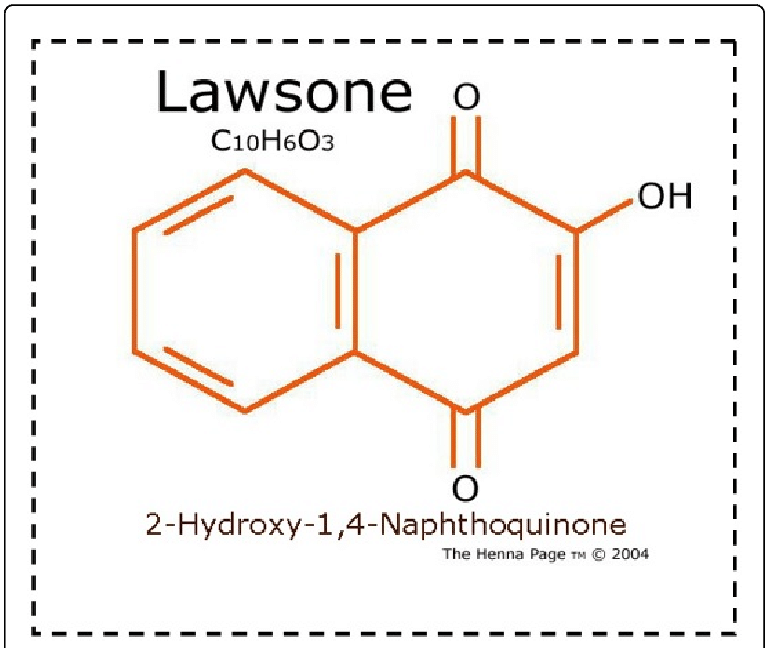
the main active component of henna is Lawsone (2-Hydroxy-1,4-Napthoquinone) which is behind the property of dying. If the concentration of lawsone is going to increase they produce more stains. The concentration of Lawsone in henna leaves is generally between 1-2%. In hot climate cultivated henna has the more concentration of lawsome 7. The property of henna can be activated to get a darker stain by preparing henna paste by the addition of hot water, lemon juice, clove, tea, and other essential oils 8. Lawsone also shows an antisickling activity 9.
Medicinal uses of Henna
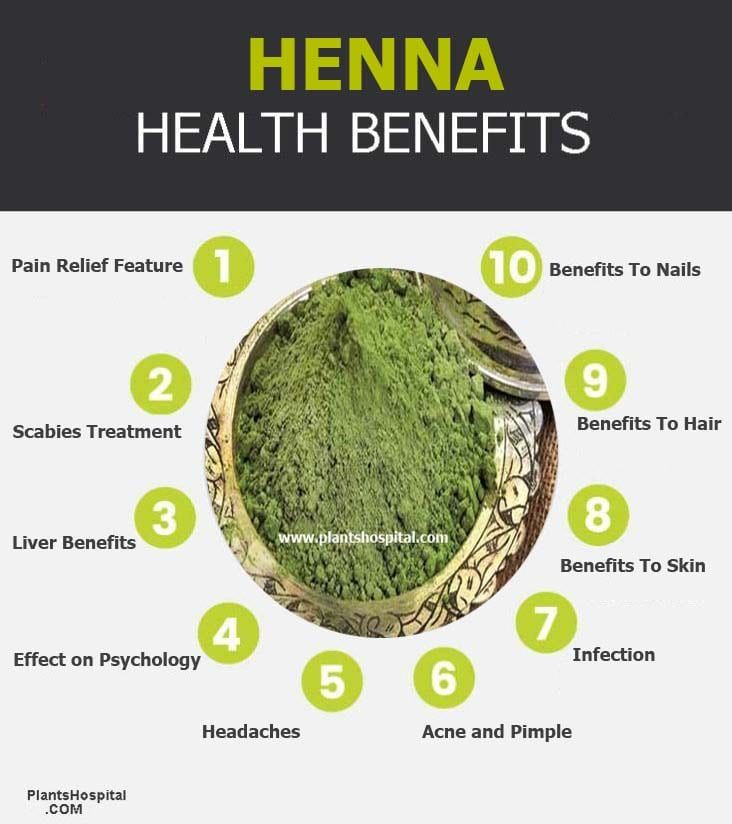
Globally, henna used as traditional medicine for the cure of various seemingly unrelated diseases. They have bacteriostatic, fungistatic, and anti-inflammatory activity(Figure 4). Pure natural henna hardly ever causes contact hypersensitivity. This article mainly shows that henna can protect Sickle cell disease patients from sickling by enhancing the oxygen affinity of sickle cells which is induced by lawsone. In low oxygen levels, lawsone could enhance the oxygen affinity of irreversible sickle cells. Enhanced oxygen affinity to the Hb S is useful in SCD treatment.
Materials and Methods
Henna powder preparations
The leaves of henna plant are collected from a developed and suitable plant in fresh form. The leaves were kept for drying by protecting sunlight for some days. Then the dried leaves were crushed to a fine powdered form by the help of grinder.
Preparation of Henna extraction
The extracted was done in distilled water and methanol to achieve maximum extraction of phytochemicals of henna. To prepare extracts, 130μg of henna in 10ml of distilled water are mixed and the same was done with methanol in the plastic tube. Then they were kept at room temperature for 3 days until the solution evaporates completely. Before experimenting aqueous and methanolic henna suspension of concentration of 1.3mg/ml was prepared by adding isotonic saline and methanol to extracted henna [11].
Anti-sickling assay
The 250μl of aqueous henna extracts suspension was added in the In 250μl of whole blood in plastic test tubes. In another separate tube 250μl of methanolic henna, extracts suspension was added to 250μl of whole blood. The above Steps were also done in duplicate and the mean of results of the duplicate tests was taken. Negative controls were run with each test sample. Then 250μl of the patient's blood is added with 250μl of isotonic saline to from Control tubes. All tubes were incubated in a water bath at 37ºC for 3 hours. Therefore, 15μl of 2% sodium bisulphite was added with 15μl of the incubated samples on a slide then it was covered with a coverslip and sealed with nail varnish (Figure 1). Then the slides were observed under the microscope after 30 minutes, 60 minutes, and 90 minutes of preparation. 200 cells were counted in each slide and the percentage of sickle cells was calculated and recorded. The percentage of sickling inhibition was calculated using the following formula [12]:
Tco = represents the percentage of sickled cells at time T on incubation with normal saline control
Ts = represents the percentage of sickled cells at time T on incubation with the extracts.
Conclusion
Out of 50 samples analyzed, 42 samples (84%) showed inhibition induced by henna and 8 samples (16%) did not show any response to henna. The anti-sickling activity is showed by both methanolic and aqueous extracts after 30 and 60 minutes following the incorporation of 2% sodium bisulphate but, after 90 minutes there was no anti-sickling activity shown. About 99 - 100% of the cells were sickled after 90 minutes. Within 30 minutes of incubation greater anti-sickling activity was observed and the inhibition was decreased after 60 minutes.
Acknowledgment
I am Krishna Kumar immensely obliged and thankful to Director Amresh Gupta sir and Arpita Singh ma’am of Goel Institute of Pharmacy & Sciences Lucknow for guiding me to write this review article.
Abbreviations:
SCD: Sickle Cell Disease